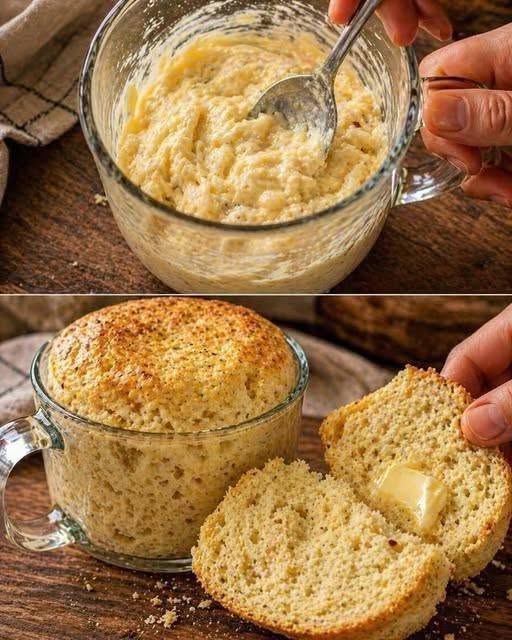
Microwave Mug Bread Recipe: Easy 3-Ingredient Bread in MinutesWhen you need a quick homemade bread option but don’t have the time to make a traditional loaf, this Microwave Mug Bread is a wonderfully convenient choice. It requires no yeast, kneading, proofing, or conventional oven. Instead, a simple batter made with almond flour, egg, and baking powder is prepared directly in a mug and cooked in the microwave.The result is a small, tender bread with a soft texture that can be sliced and used for sandwiches, breakfast, snacks, or served alongside soup. Because this recipe makes a single portion, it is particularly useful when you don’t want to prepare an entire loaf.The basic recipe contains only three main ingredients, although you can add seasonings, herbs, or cheese if you want additional flavor. From preparation to serving, the whole process takes only a few minutes.Important: This recipe is low in carbohydrates compared with conventional wheat bread, but it is not literally zero-carb. Almond flour and eggs contain small amounts of carbohydrates. Exact nutrition will vary according to the brands and quantities you use.Why You’ll Love This Mug Bread
Extremely quick: It can be cooked in roughly 60–90 seconds.
Small serving: The recipe makes one convenient portion.
No yeast: There is no fermentation or rising period.
No kneading: Simply mix the ingredients and microwave.
Minimal cleanup: The batter can be prepared directly in the mug.
Easy to customize: Add herbs, spices, or cheese for different flavors.
Versatile: Use it for sandwiches, breakfast, toast, or as a side dish.
No conventional oven: This recipe is designed specifically for microwave preparation.
IngredientsFor 1 serving, you will need:
3 tablespoons almond flour
1 large egg
¼ teaspoon baking powder
Optional IngredientsFor additional flavor, you can add:
A small pinch of salt
¼ teaspoon garlic powder
¼ teaspoon Italian seasoning
A pinch of black pepper
1 tablespoon shredded cheddar cheese
1 tablespoon grated Parmesan
Chopped fresh parsley or other herbs
1 teaspoon melted butter or olive oil
The optional ingredients aren’t necessary for the basic recipe, so feel free to keep things simple.Equipment You’ll NeedThe equipment list is short:
Microwave-safe mug or ramekin
Fork or small whisk
Measuring spoons
Knife for slicing
Small plate, if serving outside the mug
Choose a mug that provides enough room for the mixture to expand slightly during cooking. A wider mug is especially useful if you plan to slice the bread horizontally for sandwiches.Step-by-Step Instructions1. Prepare the MugLightly grease the inside of a microwave-safe mug with a small amount of butter or cooking oil.Greasing the mug helps reduce sticking and makes the cooked bread easier to remove.You don’t need a large amount of oil. A thin coating around the bottom and sides is sufficient.Always make sure the container is specifically microwave-safe.2. Add the EggCrack one large egg directly into the prepared mug.Use a fork to beat the egg thoroughly.Continue mixing until the egg white and yolk are completely combined. Properly mixing the egg is important because it helps create a more consistent texture throughout the bread.3. Add Almond FlourAdd 3 tablespoons of almond flour to the beaten egg.Sprinkle in the baking powder.If you’re using salt, garlic powder, Italian seasoning, cheese, or another seasoning, add it at this stage.4. Mix the BatterStir everything together thoroughly with the fork.Scrape around the bottom and sides of the mug to make sure there are no dry pockets of almond flour.The finished batter should be relatively smooth and evenly combined.If you’re adding shredded cheese, make sure it is distributed throughout the mixture rather than sitting entirely on the surface.5. Allow the Batter to Rest BrieflyLet the mixture sit for approximately 30 seconds.This short resting period gives the almond flour a moment to absorb some of the moisture from the egg.There is no need for a traditional bread-rising period because this recipe does not use yeast.6. Microwave the BreadPlace the mug in the microwave.Cook on high power for approximately 60–90 seconds.Microwave ovens vary considerably in power, so the exact cooking time may be different from one appliance to another.A good approach is to begin with 60 seconds.Carefully check the center. If the mixture is still wet or unset, continue cooking in 10–15 second intervals until the bread is cooked.7. Check for DonenessThe finished bread should feel firm in the center.The top should no longer look wet, and the cooked mixture should pull slightly away from the sides of the mug.Avoid automatically cooking for a much longer period because overcooking can cause the bread to become dry or rubbery.8. Let It CoolRemove the mug carefully from the microwave because it may be hot.Allow the bread to rest for approximately 1–2 minutes.This short cooling period allows the texture to settle and makes the bread easier to handle.9. Remove and SliceIf necessary, carefully run a butter knife around the edge of the bread.Turn the mug upside down over a plate and gently release the bread.For sandwich-style servings, use a sharp knife to slice the bread horizontally into two pieces.You can also leave it whole and eat it directly from the mug.How to Get the Best TextureThe texture of microwave bread depends heavily on the balance between ingredients and cooking time.Don’t Overcook ItThis is probably the most important tip.Microwave cooking can remove moisture quickly. Because eggs firm up as they heat, excessive cooking can result in a dense or rubbery texture.Start with the shorter cooking time and add additional time only when necessary.Measure Almond Flour CarefullyUse a level measuring spoon rather than packing the almond flour tightly.Too much almond flour can make the finished bread heavy and dry.Beat the Egg ThoroughlyAn evenly beaten egg helps distribute moisture throughout the batter and contributes to a more uniform crumb.Use a Wide MugA wider container creates a flatter piece of bread that is easier to slice.A narrow mug produces a taller shape that may be more difficult to use as sandwich bread.Why Does Microwave Mug Bread Become Rubbery?If your mug bread comes out rubbery, the most likely cause is overcooking.The egg provides much of the structure in this recipe. When exposed to too much heat for too long, the proteins become increasingly firm.The microwave can also cause moisture to evaporate quickly.To improve the texture next time:
Reduce the cooking time.
Begin checking at 60 seconds.
Add only 10–15 seconds at a time.
Make sure you measured the almond flour correctly.
Allow the bread to rest briefly after cooking.
How to Make Softer Mug BreadThe basic three-ingredient recipe is intentionally simple, but you can make the texture richer by adding a small amount of fat or cheese.Try adding:
1 teaspoon melted butter
1 teaspoon olive oil
1 tablespoon cream cheese
1 tablespoon shredded cheese
These additions change the basic recipe slightly, but they can make the finished bread richer and more flavorful.Savory Garlic Mug BreadFor a quick savory variation, add:
¼ teaspoon garlic powder
Pinch of salt
¼ teaspoon Italian seasoning
Mix these ingredients into the batter before microwaving.After the bread is cooked, you can brush the surface with a small amount of melted butter and sprinkle it with fresh parsley.This creates a simple garlic-style bread that pairs particularly well with soup or a pasta dinner.Cheesy Mug BreadFor a cheesy variation, add approximately 1 tablespoon of shredded cheddar, mozzarella, or Parmesan to the batter.Stir thoroughly and microwave as directed.The cheese melts into the bread and gives it a richer savory flavor.A small pinch of black pepper or paprika can add another layer of flavor.Easy Breakfast Mug BreadThis bread can be turned into a quick breakfast sandwich.Slice the cooked bread horizontally and fill it with ingredients such as:
Scrambled egg
Cheese
Avocado
Tomato
Spinach
Cooked turkey
Cooked bacon
For extra texture, toast the sliced mug bread briefly in a skillet before assembling your sandwich.How to Serve Mug BreadThere are many ways to enjoy this little bread.1. Toasted With ButterSlice the bread and toast it in a skillet until the edges become lightly browned.Serve with butter or cream cheese.2. As a SandwichSlice the bread horizontally and add your favorite sandwich fillings.3. With EggsServe alongside scrambled, fried, or boiled eggs for breakfast.4. With SoupA warm slice of mug bread makes a convenient accompaniment to soup or stew.5. With DipsCut the bread into pieces and serve with hummus, guacamole, cream cheese, or another savory dip.6. As Garlic BreadBrush the cooked bread with garlic butter and toast it briefly for crisp edges.Can You Toast Microwave Mug Bread?Yes.Freshly microwaved mug bread can be quite soft. Toasting it after cooking can improve its texture and create lightly crisp edges.After allowing the bread to cool for a minute or two:
Slice it horizontally.
Heat a skillet over medium heat.
Add the bread slices.
Toast for approximately 1–2 minutes per side.
Remove once lightly browned.
Keep an eye on the bread because thin slices can brown quickly.Can Almond Flour Be Replaced?Almond flour is important to the structure of this particular recipe.Coconut flour, for example, absorbs substantially more liquid and therefore should not be substituted in the same quantity.If you want to use coconut flour or another flour, the entire recipe needs to be reformulated with different proportions.For the easiest result, use finely ground almond flour as specified.Is This Really Zero-Carb?No.The term “zero-carb” is sometimes used casually for recipes that contain very few carbohydrates, but almond flour contains carbohydrates and eggs contain a small amount as well.The exact carbohydrate content depends on your particular ingredients.If you’re following a strict carbohydrate-restricted eating plan, check the nutrition labels of the specific almond flour and other ingredients you use.Storage InstructionsBecause this recipe makes only one serving, it is best enjoyed fresh.If you have leftovers, allow the bread to cool completely before placing it in an airtight container.Refrigerate for up to 2 days.To serve, warm it briefly in the microwave or toast it in a skillet.Toasting can help restore some of the texture that may be lost during refrigeration.Freezing InstructionsMug bread can be frozen, although freezing isn’t usually necessary because the recipe makes a single portion.If you want to freeze it:
Allow the cooked bread to cool completely.
Slice it into two pieces.
Wrap the pieces individually.
Place them in a freezer-safe bag or container.
Freeze for up to approximately 1 month for best quality.
Thaw in the refrigerator.
Toast before serving.
Approximate NutritionFor the basic recipe, nutrition will vary according to the size of the egg and the brand of almond flour.A typical serving may provide approximately:
Calories: 210–230
Protein: 10–11 grams
Fat: 18–19 grams
Total carbohydrates: 6–7 grams
Fiber: 3–4 grams
Estimated net carbohydrates: 2–3 grams
Sugar: Less than 1 gram
Adding cheese, butter, oil, or other ingredients will change the nutritional values.Frequently Asked QuestionsCan I make this without baking powder?Yes, but the finished bread will generally be denser and flatter. Baking powder provides the leavening that helps create a lighter texture.Why didn’t my bread rise much?Microwave mug bread typically doesn’t rise dramatically like yeast bread. Make sure your baking powder is fresh and that the container isn’t excessively large.Can I use coconut flour?Not as a direct one-to-one substitute. Coconut flour absorbs considerably more liquid than almond flour, so the recipe requires different proportions.Can I make it dairy-free?Yes. The basic recipe contains no dairy if you use almond flour, egg, and baking powder. Avoid butter and cheese in the optional additions.Is it nut-free?No. Almond flour is made from almonds, so this particular recipe is not suitable for a nut-free diet.Can I make several servings at once?It’s generally easier to prepare individual portions separately. Cooking several mugs simultaneously can make microwave cooking less predictable and may result in uneven cooking.Recipe CardMicrowave Mug BreadPrep Time: 2 minutes Cook Time: 60–90 seconds Resting Time: 1–2 minutes Total Time: About 5 minutes Servings: 1 Difficulty: Very Easy Cooking Method: MicrowaveIngredients
3 tablespoons almond flour
1 large egg
¼ teaspoon baking powder
Pinch of salt, optional
Seasonings or cheese, optional
Directions
Lightly grease a microwave-safe mug.
Crack the egg into the mug.
Beat the egg thoroughly with a fork.
Add almond flour and baking powder.
Add salt or optional seasonings.
Stir until completely combined with no dry pockets.
Allow the batter to rest for about 30 seconds.
Microwave on high for approximately 60 seconds.
Check the center of the bread.
Continue in 10–15 second intervals if necessary.
Remove carefully from the microwave.
Let the bread rest for 1–2 minutes.
Run a knife around the edge if necessary.
Remove the bread from the mug.
Slice horizontally for sandwiches or serve whole.
Toast if you prefer a crispier texture.
Final ThoughtsMicrowave Mug Bread is an excellent solution when you want a small portion of homemade bread without committing to a full loaf. With almond flour, egg, and baking powder, you can create a simple bread-like option in just a few minutes.The recipe is especially useful for quick breakfasts, sandwiches, snacks, and meals where you want something bread-like without turning on the oven. The basic version is mild enough to customize in many ways, while garlic, herbs, cheese, or butter can transform it into a more flavorful side.The key to getting the best result is not overcooking the bread. Start with around 60 seconds, check the center, and add short increments only when needed. Letting the bread rest briefly after cooking also helps it finish setting.Copyright-free original rewrite: This recipe article has been newly written and reorganized from the information you provided. The wording, structure, explanations, and presentation are original rather than copied verbatim from the supplied text.