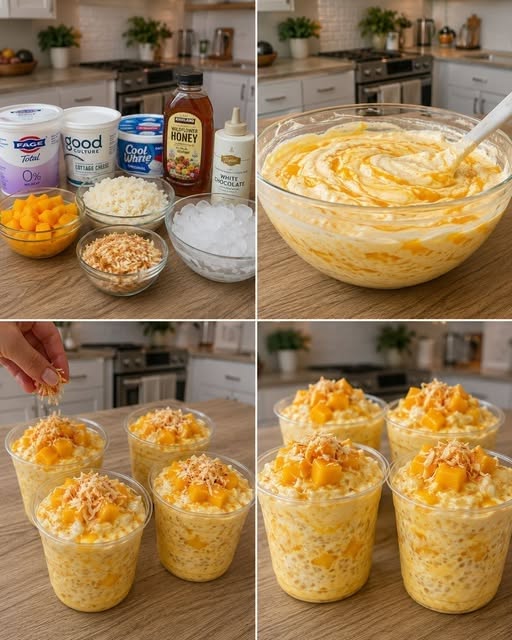
Mango Sticky Rice Ice Cream Cups are a beautiful twist on the beloved Thai-inspired combination of sweet sticky rice, creamy coconut, and ripe mango. Instead of serving the components as a traditional plated dessert, this version layers them inside individual cups, creating a colorful treat that is easy to portion, attractive to serve, and packed with contrasting textures.
Each spoonful brings together soft, chewy coconut sticky rice, cold and creamy coconut ice cream, and juicy pieces of fresh mango. A light coconut sauce ties everything together, while optional toasted sesame seeds or coconut flakes can add a pleasant finishing crunch.
This dessert is especially wonderful during warm weather, when the chilled ice cream and juicy fruit make it feel refreshing. Although the recipe requires some preparation, many of the components can be made ahead, making it practical for dinner parties, celebrations, or weekend desserts.
1. Why You’ll Love These Mango Sticky Rice Cups
These individual dessert cups combine several qualities that make them especially appealing:
- Creamy coconut ice cream
- Soft and chewy sticky rice
- Naturally sweet ripe mango
- Rich coconut flavor
- Beautiful layered presentation
- Individual serving portions
- Excellent warm-weather dessert
- Easy to customize
- Suitable for parties and gatherings
- Can be prepared partly in advance
The combination of temperatures and textures is what makes this dessert special. The cold ice cream contrasts with the tender sticky rice, while fresh mango adds a juicy element that prevents the dessert from feeling too heavy.
2. Preparation Time and Yield
Preparation Time: 30–40 minutes, excluding soaking and freezing
Rice Soaking Time: 6–8 hours or overnight
Sticky Rice Cooking Time: 25–35 minutes
Ice Cream Chilling/Freezing Time: Several hours
Total Time: Plan ahead because some components require chilling
Yield: 6 individual dessert cups
Because the rice needs to soak before steaming, it is easiest to begin preparing this dessert the day before serving.
3. Ingredients
For the Coconut Sticky Rice
- 1½ cups glutinous or sticky rice
- 1 cup full-fat coconut milk
- ⅓ cup granulated sugar
- ¼ teaspoon salt
- 1 pandan leaf, optional
- ½ teaspoon vanilla extract, optional
For the Coconut Ice Cream
- 1½ cups full-fat coconut milk
- 1 cup heavy cream
- ½ cup granulated sugar
- 1 small pinch of salt
- 1 teaspoon vanilla extract, optional
- ½ teaspoon pandan essence, optional
For the Mango Layer
- 3 large ripe mangoes
- Additional mango for garnish, if desired
For the Coconut Sauce
- ½ cup full-fat coconut milk
- 2 tablespoons sugar
- Small pinch of salt
Optional Garnishes
- Toasted sesame seeds
- Toasted coconut flakes
- Crushed roasted mung beans
- Thin mango slices
- Fresh mint leaves
4. Choose the Right Mangoes
The mango is one of the most important ingredients in this dessert, so choose fruit that is ripe, fragrant, and naturally sweet.
A ripe mango should have a pleasant aroma and give slightly when gently pressed. The exact color of the skin is not always a reliable indication of ripeness because different varieties develop different colors.
Avoid mangoes that are extremely hard, as they may be sour and lack the juicy sweetness needed to balance the coconut components.
Overripe mangoes can also be difficult to slice neatly, although they can still be used if you prefer a softer fruit layer.
5. Soak the Sticky Rice
Begin by placing the glutinous rice in a large bowl.
Cover it generously with cool water and rinse the rice several times. Continue rinsing until the water becomes noticeably clearer.
After rinsing, cover the rice with fresh water.
Allow it to soak for 6–8 hours or overnight.
This soaking period is important because glutinous rice needs sufficient hydration before steaming. Properly soaked rice cooks into the soft, chewy texture that makes this dessert distinctive.
6. Steam the Rice
After soaking, drain the rice thoroughly.
Place the rice into a bamboo steamer or heat-safe steaming basket lined with a clean cloth or suitable steaming liner.
Spread the rice into an even layer.
Steam over medium heat until the grains become tender, translucent, and sticky. Depending on the equipment and depth of the rice, this may take approximately 25–35 minutes.
Check the rice toward the end of cooking. It should be tender and chewy without becoming excessively wet or mushy.
7. Prepare the Coconut Mixture
While the rice is steaming, prepare the sweet coconut mixture.
Pour the coconut milk into a saucepan.
Add the sugar and salt.
If using pandan leaf, add it to the saucepan while the mixture warms.
Heat gently over low to medium-low heat, stirring until the sugar completely dissolves.
Do not bring the coconut milk to a vigorous boil. Gentle heating is enough to dissolve the sugar and infuse the mixture with flavor.
Remove the pandan leaf before combining the mixture with the rice.
If using vanilla extract, stir it in after removing the coconut mixture from the heat.
8. Combine the Sticky Rice and Coconut Mixture
When the rice has finished steaming, transfer it to a large bowl while it is still hot.
Pour the warm coconut mixture over the rice.
Use a spatula or wooden spoon to gently fold everything together.
Do not aggressively mash the rice. The goal is to coat the grains while allowing them to maintain their shape.
Cover the bowl and let the rice rest for approximately 20–30 minutes.
During this time, the sticky rice absorbs the sweet coconut mixture and develops a glossy, rich consistency.
9. Prepare the Coconut Ice Cream
While the sticky rice rests, begin preparing the coconut ice cream.
Combine the full-fat coconut milk, heavy cream, sugar, and salt in a bowl.
Whisk thoroughly until the sugar is dissolved.
Add vanilla extract or pandan essence if desired.
Taste the mixture and make sure the sweetness is balanced. Keep in mind that cold temperatures can make flavors seem less intense, so the mixture should taste pleasantly flavorful before freezing.
10. Churn the Ice Cream
If you have an ice cream maker, pour the coconut mixture into the machine and churn according to the manufacturer’s instructions.
Continue until the mixture reaches a thick, soft-serve-like consistency.
Transfer the ice cream to a freezer-safe container and freeze until firm enough to scoop.
If you do not have an ice cream machine, pour the mixture into a shallow freezer-safe container.
Freeze it and stir thoroughly every 30–45 minutes during the early freezing stage. Repeated stirring helps break up larger ice crystals and encourages a smoother consistency.
Continue until the mixture becomes creamy and scoopable.
11. Prepare the Mangoes
While the ice cream freezes, prepare the mangoes.
Wash and peel the fruit.
Cut the mango flesh away from the pit and slice it into thin strips or small cubes.
For a more elegant presentation, cut several thin mango slices and arrange them vertically around the inside of each glass.
Keep some diced mango aside for the top of the finished dessert.
Cover the prepared mangoes and refrigerate them until assembly.
12. Make the Coconut Sauce
Place the coconut milk, sugar, and salt in a small saucepan.
Warm the mixture gently while stirring.
Allow it to simmer very lightly until it becomes slightly more concentrated.
The sauce does not need to become extremely thick. It should remain pourable so it can drizzle over the assembled dessert.
Remove it from the heat and allow it to cool slightly.
13. Prepare the Dessert Cups
Choose six clear dessert glasses or small serving cups.
Clear cups work particularly well because they allow the individual layers to remain visible.
Before beginning, make sure all the components are ready:
- Coconut sticky rice
- Coconut ice cream
- Fresh mango
- Coconut sauce
- Optional garnishes
Having everything prepared makes assembly quick and easy.
14. Add the Sticky Rice Layer
Place a spoonful of coconut sticky rice into the bottom of each cup.
Gently press it down so it forms an even layer.
Do not pack the rice too tightly. It should remain soft and chewy rather than becoming a dense block.
The sticky rice acts as the foundation of the dessert and should provide enough structure to support the ice cream above it.
15. Add the Coconut Ice Cream
Place a generous scoop of coconut ice cream over the sticky rice.
If the ice cream is very firm, allow it to sit at room temperature briefly until it becomes easier to scoop.
The ice cream should remain cold and firm enough to create a clear layer.
As it begins to soften, some of it will naturally melt into the sticky rice, creating a delicious creamy transition between the two components.
16. Arrange the Mango
Add mango pieces around the ice cream and along the sides of the glass if desired.
Adding some mango around the edges makes the cups look especially attractive and ensures that every spoonful can include fruit.
Place additional diced mango on top.
The bright yellow-orange fruit creates a beautiful contrast against the white coconut ice cream and pale sticky rice.
17. Drizzle With Coconut Sauce
Spoon or drizzle a small amount of coconut sauce over the top.
Avoid using too much sauce because the dessert already contains several rich components.
A light drizzle provides enough extra coconut flavor without overwhelming the fresh mango.
The sauce can also trickle between the layers, bringing the flavors together.
18. Add the Finishing Touches
Finish the dessert with your choice of toppings.
Toasted sesame seeds provide a subtle nutty flavor.
Toasted coconut adds additional coconut aroma and crunch.
Crushed roasted mung beans provide a more traditional-style textural contrast.
You can also add a few thin mango slices or a small mint leaf for decoration.
Keep the garnish relatively simple so the mango, sticky rice, and coconut remain the stars of the dessert.
19. Chill Before Serving
Once assembled, place the dessert cups in the refrigerator or freezer briefly, depending on the firmness of the ice cream.
The goal is to keep the ice cream cold without allowing it to become completely frozen solid.
If the cups have been sitting out during assembly, a short chilling period can help restore the ideal temperature.
Serve the dessert cold and enjoy it shortly after assembly.
20. Tips for the Best Results
Don’t Skip the Rice Soaking
Proper soaking helps the sticky rice cook evenly and develop its characteristic chewy texture.
Use Full-Fat Coconut Milk
Full-fat coconut milk provides a richer flavor and creamier consistency than lighter varieties.
Avoid Boiling the Coconut Mixture
Gentle heating is sufficient. Vigorous boiling can cause coconut milk to separate.
Cool the Mango
Cold mango creates a refreshing contrast with the creamy ice cream and coconut rice.
Don’t Overfill the Cups
Leave enough room at the top for mango, sauce, and garnishes.
Assemble Close to Serving
For the best texture, assemble the final cups relatively close to serving time.
21. Easy Variations
You can customize this dessert in several ways.
For a passion fruit version, drizzle a little passion fruit pulp over the mango.
For a strawberry tropical version, add sliced strawberries alongside the mango.
For a coconut crunch version, add toasted coconut between the layers.
For a lime variation, add finely grated lime zest to the coconut sauce.
For a pandan-inspired dessert, infuse the sticky rice mixture and ice cream with pandan for a distinctive aromatic flavor.
22. Make-Ahead Strategy
Several components can be prepared ahead of time.
The sticky rice can be cooked and refrigerated before assembly. Allow it to come closer to room temperature before layering so it does not immediately harden the ice cream.
The coconut ice cream can be prepared several days in advance.
The blueberry-free mango topping is best prepared relatively close to serving because fresh mango can soften over time.
The coconut sauce can also be prepared ahead and refrigerated. Warm it gently or allow it to come to a suitable temperature before serving.
23. Frequently Asked Questions
Can I use regular rice?
Glutinous rice is strongly recommended because ordinary rice does not have the same sticky, chewy texture.
Can I use canned mango?
Fresh ripe mango is preferable, but canned mango can be used when fresh fruit is unavailable. Drain it thoroughly before assembling.
Can I make the dessert without an ice cream machine?
Yes. Freeze the coconut mixture in a shallow container and stir it regularly during freezing to help improve the texture.
Can I prepare the sticky rice the day before?
Yes. Prepare it ahead, cover it well, and refrigerate it. Allow it to soften slightly before assembly.
Can I use store-bought coconut ice cream?
Absolutely. Using prepared coconut ice cream is a convenient shortcut when you want to reduce preparation time.
24. Final Recipe Card
Mango Sticky Rice Ice Cream Cups
Yield: 6 individual cups
Ingredients
Sticky rice:
- 1½ cups glutinous rice
- 1 cup full-fat coconut milk
- ⅓ cup sugar
- ¼ teaspoon salt
- Optional pandan or vanilla
Ice cream:
- 1½ cups full-fat coconut milk
- 1 cup heavy cream
- ½ cup sugar
- Pinch of salt
- Optional vanilla or pandan
Fruit:
- 3 ripe mangoes
Sauce:
- ½ cup coconut milk
- 2 tablespoons sugar
- Pinch of salt
Directions
- Rinse the glutinous rice several times.
- Soak it in water for 6–8 hours or overnight.
- Drain the rice thoroughly.
- Steam it until tender, chewy, and slightly translucent.
- Warm coconut milk with sugar and salt until the sugar dissolves.
- Combine the warm coconut mixture with the hot sticky rice.
- Cover and allow the rice to absorb the coconut mixture for 20–30 minutes.
- Prepare the coconut ice cream mixture by combining coconut milk, cream, sugar, and salt.
- Add vanilla or pandan if desired.
- Churn the mixture in an ice cream machine, or freeze and stir periodically if making it without a machine.
- Peel and slice or dice the ripe mangoes.
- Prepare the coconut sauce by gently heating coconut milk, sugar, and salt.
- Place a layer of sticky rice into each dessert cup.
- Add coconut ice cream.
- Arrange mango pieces around and over the ice cream.
- Drizzle lightly with coconut sauce.
- Add toasted sesame seeds, coconut flakes, or another garnish if desired.
- Chill briefly and serve cold.