A Comforting Breakfast Classic with a Gourmet Twist
Soft scrambled eggs are one of those timeless breakfast staples that never lose their charm. They are warm, delicate, and naturally rich, offering a comforting texture that feels both simple and luxurious at the same time. Whether served on toasted sourdough, layered in a breakfast wrap, or enjoyed on their own, creamy scrambled eggs can instantly elevate any morning meal.
What makes this dish special is not complexity, but technique. While the ingredients list is minimal, the cooking method determines everything. Many home cooks unintentionally overcook their eggs by using high heat, which leads to dry, rubbery curds instead of soft, buttery folds.
The goal of this guide is to help you achieve restaurant-style scrambled eggs at home using slow cooking, gentle stirring, and proper heat control. Once you master this method, you will consistently get fluffy, creamy eggs with a velvety texture every single time.
This approach is inspired by classic European breakfast techniques and widely used in professional kitchens where low-heat egg preparation is the standard for premium texture.
Why Creamy Scrambled Eggs Have a Superior Texture
The difference between ordinary scrambled eggs and soft scrambled eggs lies in how the proteins are treated during cooking.
When eggs are exposed to high heat, the proteins tighten rapidly, forcing out moisture. This results in a dry and crumbly texture. On the other hand, slow heat allows proteins to set gradually, trapping moisture and creating soft, custard-like curds.
This gentle cooking style is what gives fluffy scrambled eggs their signature silkiness.
Key benefits of slow-cooked scrambled eggs:
- Softer, creamier texture
- Richer natural flavor
- Moist, custard-like consistency
- Better control over doneness
- Restaurant-quality finish
This is why many professional chefs avoid high heat entirely when preparing scrambled eggs for brunch menus.
Core Ingredients for Perfect Scrambled Eggs
The beauty of this recipe lies in its simplicity. Only a few ingredients are needed to achieve a rich and satisfying flavor.
Essential Ingredients
- Large fresh eggs
- Unsalted butter
- Salt
- Freshly ground black pepper
Optional Enhancements for Flavor & Texture
To enhance your scrambled eggs naturally, you may optionally include:
- Fresh chives
- Parsley
- Dill
- Crème fraîche
- Cheddar cheese (shredded)
- Parmesan cheese
- Goat cheese
- Heavy cream
- Whole milk
- Olive oil
- Smoked salmon
- Avocado slices
These ingredients help customize your breakfast while maintaining the classic foundation of the recipe.
Choosing the Best Eggs for Maximum Creaminess
Egg quality plays a major role in flavor and texture. Fresher eggs generally produce richer yolks and smoother scrambled eggs.
For best results, choose:
- Free-range eggs
- Organic eggs
- Pasture-raised eggs
- Farm-fresh eggs when available
These varieties tend to have deeper color, stronger flavor, and a creamier consistency when cooked.
The Science Behind Soft and Fluffy Scrambled Eggs
Understanding the cooking process helps you avoid common mistakes and achieve consistent results.
1. Gentle Heat Is the Secret
Low temperature prevents moisture loss and keeps eggs soft.
2. Controlled Stirring Creates Larger Curds
Slow folding instead of aggressive whisking ensures creamy texture.
3. Timing Prevents Overcooking
Eggs should be removed while still slightly glossy because they continue cooking off heat.
4. Butter Improves Texture
Butter not only adds flavor but also creates a silky coating that enhances smoothness.
Step-by-Step Method for Creamy Scrambled Eggs
Step 1: Whisking the Eggs Properly
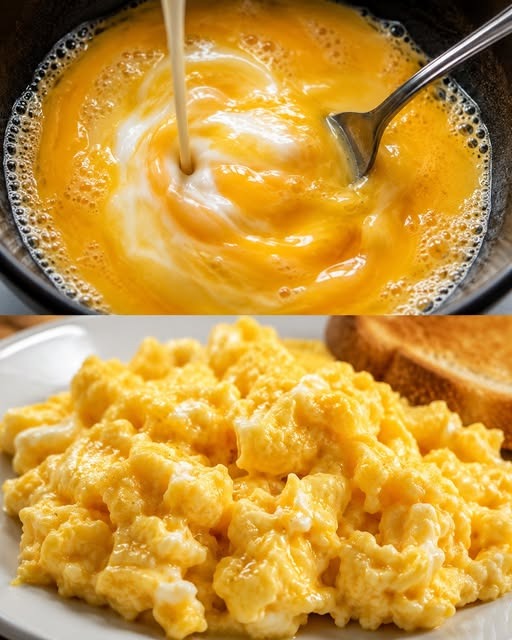
Start by cracking fresh eggs into a bowl. Whisk until yolks and whites are fully combined and slightly frothy.
For extra richness, you may add a small splash of milk or cream. This is optional but helps create a softer texture.
Avoid over-whisking if you prefer larger curds.
Step 2: Preparing the Cooking Surface
Use a nonstick pan or a well-seasoned cast iron skillet.
Place it over low to medium-low heat, then add unsalted butter. Allow it to melt slowly until it becomes foamy but not browned.
Burnt butter can change flavor and affect the delicate texture of eggs.
Step 3: Slow Cooking the Eggs
Pour the whisked eggs into the warm pan.
Let them sit for a few seconds before stirring. Then begin gently pushing the eggs across the pan using a silicone spatula.
Use slow folding motions rather than fast stirring. This helps form soft, creamy curds.
The mixture should remain quiet while cooking. If you hear strong sizzling, the heat is too high.
Continue this process for 3–5 minutes until eggs begin to thicken but remain glossy.
Step 4: Removing at the Right Time
Take the pan off the heat when eggs are mostly set but still slightly wet in appearance.
Residual heat will finish cooking them naturally. This prevents dryness and keeps them silky.
Step 5: Final Seasoning and Serving
Add salt and freshly ground black pepper to taste.
Top with herbs, cheese, or crème fraîche if desired.
Serve immediately while warm for the best texture and flavor.
Common Mistakes to Avoid When Making Scrambled Eggs
Using High Heat
This is the most common issue. High heat causes rubbery texture.
Over-Stirring
Too much movement breaks curds into small dry pieces.
Leaving Eggs Unattended
Eggs cook quickly and need constant attention.
Overcooking
Removing eggs too late results in dryness.
Overloading Ingredients
Too many add-ins can overpower the natural egg flavor.
Best Cookware for Soft Scrambled Eggs
The right pan ensures even cooking and prevents sticking.
Recommended options:
- Nonstick skillet (best for beginners)
- Seasoned cast iron pan (for experienced cooks)
Avoid stainless steel unless you are confident with temperature control, as eggs may stick easily.
Serving Ideas for a Gourmet Breakfast Experience
Soft scrambled eggs can be enjoyed in many delicious ways:
- On buttered sourdough toast
- Inside breakfast burritos
- With avocado toast
- Alongside smoked salmon
- In a breakfast bowl with sautéed greens
- In croissant sandwiches
These combinations make eggs suitable for both quick meals and elegant brunch spreads.
Nutrition and Health Benefits of Eggs
Eggs are a nutrient-dense food that supports a balanced diet.
They provide:
- High-quality protein
- Vitamin B12
- Vitamin D
- Choline for brain health
- Healthy fats
- Iron and selenium
This makes scrambled eggs an excellent choice for a high-protein breakfast recipe that supports energy and fullness.
Professional Tips for Restaurant-Style Results
To achieve café-quality scrambled eggs at home:
- Use European-style butter if available
- Add crème fraîche at the end for richness
- Finish with fresh herbs for aroma
- Serve on toasted artisan bread
- Season lightly to preserve natural flavor
These small upgrades significantly enhance presentation and taste.
Final Thoughts on Perfect Scrambled Eggs
Soft scrambled eggs are proof that simple cooking can still feel luxurious. With just a few ingredients and the right technique, you can transform an everyday breakfast into something smooth, rich, and deeply satisfying.
The key lies in patience—low heat, gentle stirring, and careful timing. Once you master this method, scrambled eggs become more than just food; they become a comforting ritual that sets the tone for your day.
PART 2: QUICK & EASY CREAMY SCRAMBLED EGGS RECIPE
Simple Soft Scrambled Eggs (10-Minute Recipe)
Preparation Time: 5 minutes
Cooking Time: 5 minutes
Total Time: 10 minutes
Servings: 2
Ingredients
- 4 large eggs
- 1 tablespoon unsalted butter
- Salt to taste
- Freshly ground black pepper
- Optional: chopped chives, parsley, crème fraîche, shredded cheese, or heavy cream
Instructions
1. Beat the Eggs
Whisk eggs in a bowl until smooth and slightly frothy.
2. Heat the Pan
Place a nonstick skillet on low to medium-low heat.
3. Melt Butter
Add butter and let it melt gently without browning.
4. Cook Slowly
Pour in eggs and allow them to sit briefly before stirring.
5. Fold Gently
Stir slowly every 20–30 seconds until soft curds form.
6. Remove Early
Take off heat when eggs are creamy and slightly glossy.
7. Season and Serve
Add salt and black pepper. Top with herbs or cheese if desired.
Serve immediately.
Helpful Tips
- Always cook on low heat
- Stir gently for creamy texture
- Remove before fully set
- Serve immediately for best taste
Serving Ideas
- Avocado toast topping
- Breakfast burrito filling
- Smoked salmon bagels
- Sautéed spinach bowl
- Croissant breakfast sandwich