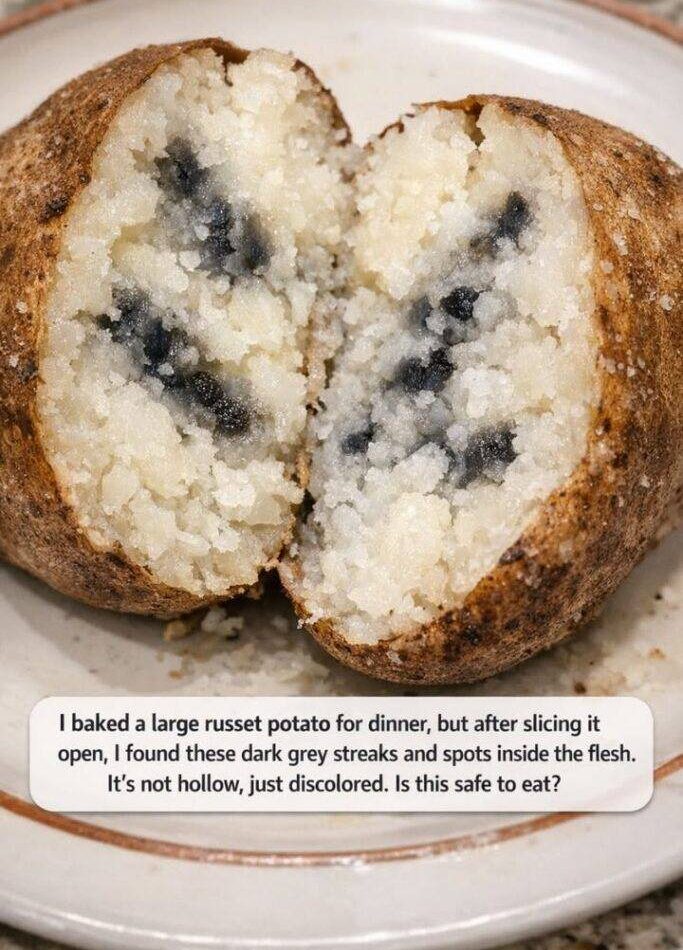
Potatoes are one of the most loved comfort foods in kitchens around the world. From crispy fries and creamy mashed potatoes to loaded baked potatoes and hearty casseroles, russet potatoes are especially popular because of their fluffy texture and rich flavor. But sometimes, after baking or cutting open a potato, you may notice dark grey streaks, black patches, or unusual spots hidden inside the flesh. This can instantly make anyone question whether the potato is spoiled or still safe to eat.
If you’ve ever sliced into a baked russet potato and discovered dark discoloration, you are not alone. Many home cooks experience this issue and wonder if they should throw the potato away or continue using it. In most situations, these marks are harmless bruises caused during handling and storage. However, there are also cases where discoloration may point to spoilage, rot, or disease. Knowing the difference can help you avoid food waste while also protecting your health.
This detailed guide explains why russet potatoes develop dark spots, what causes internal bruising, how to check if a potato is still edible, and the best ways to store potatoes to prevent future discoloration. You’ll also learn professional kitchen tips, food safety advice, and practical cooking methods to keep potatoes fresh and delicious.
Understanding the Grey and Black Marks Found Inside Russet Potatoes
When you cut open a russet potato and notice dark grey or black streaks inside, these blemishes are commonly known as internal black spots or internal bruising. These marks form beneath the skin and are often hidden until the potato is sliced or baked.
Although the appearance may seem unpleasant, internal bruising is usually not dangerous. The potato flesh changes color because the cells inside the potato become damaged. Once damaged, natural enzymes react with oxygen, creating dark pigments similar to how apples or bananas brown after being cut.
The discoloration can appear in several forms:
- Small dark dots
- Grey streaks
- Black patches
- Circular bruised areas
- Shadowy discoloration under the skin
In many cases, only part of the potato is affected while the remaining flesh stays perfectly healthy and edible.
Why Russet Potatoes Develop Internal Black Spots
Potatoes may look strong from the outside, but they bruise quite easily. Internal black spots usually occur before the potato even reaches your kitchen.
Rough Handling During Harvesting
Potatoes are often harvested using machinery. During this process, they can be dropped, squeezed, or struck against hard surfaces. Even small impacts may damage the internal potato cells.
Since bruising develops beneath the skin, the potato can appear normal externally while hiding dark spots inside.
Damage During Transportation
After harvesting, potatoes travel long distances in trucks and storage containers. Constant movement, stacking pressure, and vibration can create internal bruises. Large russet potatoes are particularly vulnerable because of their size and weight.
Improper Storage Conditions
Storage temperature plays a major role in potato quality. Potatoes stored in extremely cold conditions become more sensitive to bruising. Excess moisture and humidity can also increase the chance of internal discoloration.
Pressure Bruising
When heavy objects are placed on top of potatoes, pressure damage may occur. This commonly happens in grocery stores or at home when potatoes are stored improperly.
Are Dark Spots Inside Potatoes Dangerous?
One of the biggest concerns people have is whether these dark areas are safe to eat. Fortunately, internal bruising itself is generally harmless.
If the potato:
- Smells normal
- Feels firm
- Has no mold
- Is not slimy
- Does not contain large rotten sections
then the dark spots are usually only cosmetic.
You can simply cut away the discolored areas and cook the remaining potato normally.
However, not all discoloration should be ignored. Certain signs may indicate spoilage or disease rather than harmless bruising.
How to Tell the Difference Between Bruising and Rotten Potatoes
Knowing how to identify spoiled potatoes is extremely important for food safety.
Signs of Harmless Bruising
A potato with simple internal bruising will usually have:
- Small dark spots or streaks
- Firm texture
- Neutral earthy smell
- Dry surface
- Healthy flesh around the dark area
The potato remains safe to cook and eat after trimming the bruised sections.
Signs of Potato Rot
You should discard the potato immediately if you notice:
- Sour or unpleasant odor
- Slimy or wet texture
- Mold growth
- Large black mushy sections
- Wrinkled skin with soft spots
- Oozing liquid
These are clear indicators that bacteria or fungi have started breaking down the potato.
Signs of Potato Disease
Some plant diseases also cause discoloration. Conditions like late blight or fungal infections may spread through the flesh unevenly and affect the potato skin as well.
Diseased potatoes often show:
- Sunken lesions
- Extensive discoloration
- Skin damage
- Rotting smell
- Rapid decay
When in doubt, it is safer to throw the potato away.
Easy Safety Checks Before Cooking Potatoes
Before preparing potatoes, perform a few quick checks.
Smell Test
Fresh potatoes should smell earthy and mild. A sour, moldy, or musty smell indicates spoilage.
Texture Test
Healthy potatoes feel firm and solid. Avoid potatoes that feel squishy, slimy, or hollow.
Visual Inspection
Look carefully for:
- Mold
- Green skin
- Deep cuts
- Large black areas
- Sprouts
- Wrinkling
Minor bruises are acceptable, but widespread damage is not.
What Causes Potatoes to Turn Grey After Cooking?
Sometimes potatoes appear normal when raw but turn grey after cooking. This happens because of oxidation.
When cooked potato flesh reacts with oxygen, certain compounds darken naturally. This is especially common when potatoes cool down after baking or boiling.
Factors That Increase Greying
- Exposure to air
- Iron reactions during cooking
- Refrigeration
- Long holding times after cooking
- Metal cookware reactions
The discoloration may not look attractive, but it usually does not affect safety.
Best Ways to Prevent Potato Discoloration
Proper storage and handling can greatly reduce dark spots and greying.
Store Potatoes in a Cool Dark Place
The ideal temperature for potato storage is around 45–50°F (7–10°C). A pantry, cellar, or cool cupboard works well.
Avoid storing potatoes:
- Near ovens
- In direct sunlight
- In warm kitchens
- Inside sealed plastic bags
Keep Potatoes Dry
Moisture encourages rot and mold growth. Store potatoes in breathable containers like paper bags, baskets, or mesh sacks.
Avoid Refrigeration
Cold temperatures convert potato starch into sugar, affecting flavor and texture while increasing discoloration.
Handle Gently
Do not throw or drop potatoes. Gentle handling reduces internal bruising.
Why Green Potatoes Should Never Be Ignored
Another common potato issue is green skin. This occurs when potatoes are exposed to light for too long.
Green potatoes produce solanine, a natural toxin that can cause:
- Nausea
- Vomiting
- Headaches
- Digestive discomfort
Small green areas can be peeled away, but heavily green potatoes should be discarded.
Can You Eat Potatoes With Sprouts?
Sprouted potatoes are common in home kitchens. Small sprouts alone are not always dangerous.
You can still use the potato if:
- The potato remains firm
- There are only tiny sprouts
- No green discoloration exists
Simply remove the sprouts and peel the potato thoroughly.
Discard potatoes that are:
- Soft
- Shriveled
- Green
- Strong-smelling
Nutritional Benefits of Russet Potatoes
Despite occasional bruising issues, russet potatoes remain highly nutritious.
They provide:
- Vitamin C
- Potassium
- Fiber
- Complex carbohydrates
- Vitamin B6
- Antioxidants
Potatoes are naturally fat-free and can be part of a balanced diet when prepared healthfully.
Cooking Tips for Better Baked Potatoes
Perfect baked potatoes start with proper preparation.
Choose Firm Potatoes
Select russet potatoes without major bruises or soft spots.
Wash Thoroughly
Scrub the skin well to remove dirt and debris.
Pierce the Skin
Use a fork to poke small holes, allowing steam to escape during baking.
Use High Heat
Bake at 400°F to 425°F for crispy skin and fluffy interiors.
Avoid Overcrowding
Allow airflow around each potato for even cooking.
What to Do If You Find Dark Spots After Baking
If you discover dark streaks after baking:
- Cut the potato open fully.
- Inspect the discolored area carefully.
- Smell the potato.
- Remove dark bruised sections if the potato otherwise appears healthy.
- Discard if odor, slime, or rot is present.
Most lightly bruised potatoes remain edible after trimming.
How Grocery Stores and Farms Reduce Potato Bruising
Commercial growers work hard to minimize bruising.
Cushioning Equipment
Modern harvesting equipment uses softer materials to reduce impact damage.
Controlled Storage
Temperature and humidity are carefully monitored.
Gentle Packaging
Packaging systems are designed to limit pressure and vibration during transport.
Even with these precautions, some bruising still occurs naturally.
Common Myths About Dark Spots in Potatoes
Myth 1: Dark Spots Always Mean Rot
False. Most internal black spots are harmless bruises.
Myth 2: Grey Potatoes Are Poisonous
False. Grey discoloration from oxidation is generally safe.
Myth 3: All Sprouted Potatoes Must Be Thrown Away
False. Small sprouts can often be removed safely.
Myth 4: Refrigeration Keeps Potatoes Fresh Longer
False. Refrigeration may worsen flavor and discoloration.
Expert Kitchen Advice for Potato Storage
Professional cooks follow several important storage practices.
Keep Potatoes Separate From Onions
Onions release gases that accelerate spoilage.
Use Ventilated Containers
Air circulation helps prevent moisture buildup.
Rotate Older Potatoes First
Use older potatoes before newer ones to reduce waste.
Check Potatoes Weekly
Remove damaged potatoes quickly to prevent spoilage from spreading.
Final Thoughts on Dark Grey Spots in Russet Potatoes
Finding dark grey streaks inside a baked russet potato can certainly feel alarming at first. However, in most cases, these marks are simply harmless bruises caused by rough handling, pressure, or storage conditions before the potato arrived in your kitchen.
The key is learning how to identify the difference between cosmetic bruising and actual spoilage. A firm potato with no foul odor or slime is usually safe to eat after removing the dark areas. On the other hand, potatoes showing signs of mold, rot, softness, or strong smells should always be discarded.
By storing potatoes correctly, handling them gently, and inspecting them before cooking, you can enjoy fresher, safer, and better-tasting potatoes every time. Whether you’re preparing crispy fries, mashed potatoes, or loaded baked russet potatoes, understanding these common potato issues helps reduce waste and improve kitchen confidence.
Part 2: Simple Recipe Version
Easy Guide to Checking Dark Spots Inside Russet Potatoes
Ingredients
- 1 large russet potato
- Clean water for washing
- Knife for cutting
- Optional: olive oil
- Optional: sea salt
- Optional authentic additions:
- Black pepper
- Butter
- Sour cream
- Fresh parsley
Instructions
Step 1: Wash the Potato
Rinse the russet potato thoroughly under running water to remove dirt and debris.
Step 2: Bake the Potato
Bake at 400°F (200°C) for about 50–60 minutes or until soft inside.
Step 3: Slice Open Carefully
Cut the baked potato down the center and inspect the inside flesh.
Step 4: Check for Dark Spots
Look for dark grey streaks or black spots inside the potato.
Step 5: Smell and Texture Test
- If the potato smells fresh and feels firm, it is usually safe.
- If it smells sour, feels slimy, or contains mold, discard it immediately.
Step 6: Remove Bruised Areas
Cut away small dark spots or bruised sections before eating.
Step 7: Serve and Enjoy
Top with butter, black pepper, parsley, or sour cream if desired.
Storage Tips
- Store potatoes in a cool dark place
- Avoid refrigeration
- Keep potatoes dry and ventilated
- Do not store near onions