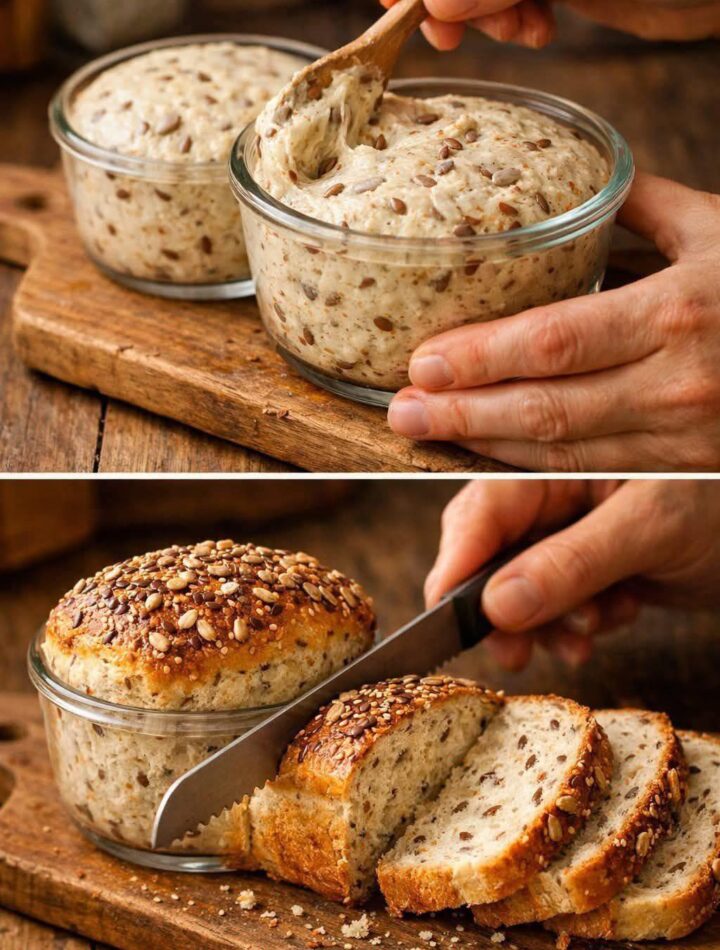
Homemade bread has become one of the most searched comfort food recipes because people love the aroma, texture, and freshness of bread baked right in their own kitchen. Among the many bread recipes available today, seeded no-knead jar bread stands out as one of the easiest and most rewarding options for beginner bakers and experienced home cooks alike.
This easy artisan bread recipe delivers a crisp golden crust, soft chewy interior, and rich nutty flavor with almost no effort. Unlike traditional bread recipes that require kneading, folding, and advanced baking techniques, this simple no-knead bread relies on slow fermentation to develop flavor and texture naturally. The result is bakery-style bread with minimal hands-on work.
What makes this homemade seeded bread even more special is the addition of healthy mixed seeds such as flax seeds, sunflower seeds, sesame seeds, and pumpkin seeds. These ingredients provide crunch, flavor, fiber, healthy fats, and important nutrients while transforming a basic loaf into a wholesome artisan bread perfect for everyday meals.
Whether you are searching for an easy homemade bread recipe, healthy seeded bread, overnight artisan loaf, no-knead bread for beginners, or rustic jar bread recipe, this version combines simplicity, nutrition, and delicious flavor in one satisfying loaf.
Why No-Knead Bread Became So Popular
No-knead bread recipes have become extremely popular because they remove one of the most intimidating parts of bread baking: kneading.
Traditional bread often requires:
- Extensive kneading
- Complicated shaping
- Careful gluten development
- Multiple rising stages
- Special equipment
No-knead bread simplifies the process dramatically. Instead of physically kneading the dough, time does the work naturally. During the long resting period, gluten slowly develops on its own, creating the chewy texture and airy crumb that artisan bread is known for.
This method is ideal for:
- Beginner bakers
- Busy households
- Overnight meal prep
- Homemade bread lovers
- Healthy eating enthusiasts
Because of its simplicity and reliable results, no-knead bread has become one of the most widely searched homemade bread styles online.
What Makes Seeded Jar Bread Unique
Unlike standard bread loaves baked in pans, jar bread is prepared in a heat-safe glass jar or compact baking dish. Baking in a jar helps the dough maintain structure while creating a beautifully moist center and crisp crust.
The jar method also creates:
- Better shape retention
- Soft interior texture
- Crispy artisan crust
- Beautiful rustic appearance
- Even baking results
The addition of seeds enhances both flavor and texture while making the bread more nutritious than many traditional white bread recipes.
The Flavor and Texture of Seeded Artisan Bread
One of the biggest reasons people love seeded bread is the incredible contrast between the crust and interior.
Texture Highlights
- Crispy golden crust
- Soft airy crumb
- Light chewiness
- Crunch from seeds
- Moist interior
Flavor Profile
The bread offers mild wheat flavor balanced with the nutty taste of seeds and subtle fermentation notes from the overnight rise.
Optional additions like honey or olive oil can add:
- Slight sweetness
- Richness
- Moisture
- Enhanced aroma
Because the recipe is simple, every ingredient contributes directly to the final flavor.
The Importance of Slow Fermentation
The long resting period is one of the most important steps in no-knead bread baking. Allowing the dough to rise for 8 to 12 hours creates deep flavor and natural gluten development.
Benefits of Overnight Fermentation
- Better texture
- Improved flavor
- Easier digestion
- Stronger gluten structure
- Airier bread crumb
During fermentation, yeast slowly consumes sugars in the flour and releases gases that create bubbles inside the dough. This produces the airy artisan-style structure that makes homemade bread feel professional and bakery-quality.
Slow fermentation is also associated with improved nutrient absorption because it helps break down certain compounds naturally present in flour.
Why Seeds Make Bread Healthier
Seeds are one of the easiest ways to improve the nutritional value of homemade bread.
Common Seed Choices
Flax Seeds
Rich in fiber and omega-3 fatty acids.
Sunflower Seeds
Provide healthy fats, vitamin E, and crunch.
Sesame Seeds
Add nutty flavor and minerals like calcium.
Pumpkin Seeds
Contain protein, magnesium, and antioxidants.
Adding seeds transforms simple bread into a nutrient-rich option suitable for balanced diets and healthy lifestyles.
Nutritional Benefits of Homemade Seeded Bread
Compared to many store-bought breads, homemade seeded bread often contains fewer preservatives and artificial ingredients.
Potential Health Benefits
- Higher fiber content
- Plant-based protein
- Healthy fats
- Better ingredient control
- Reduced additives
- Lower sodium customization
Seeds can also help improve satiety, meaning the bread may help keep you fuller for longer periods.
Homemade bread allows complete control over ingredients, making it easier to avoid unnecessary preservatives, excess sugars, and highly processed additives often found in commercial bakery products.
Why This Recipe Is Perfect for Beginners
Many people avoid bread baking because they believe it requires advanced baking skills. This recipe removes most of the stress and complexity.
Beginner-Friendly Features
- No kneading required
- Minimal ingredients
- One-bowl preparation
- Simple overnight rise
- Easy shaping
- Flexible baking process
Even first-time bakers can achieve impressive results with this recipe because the dough naturally develops texture and structure during fermentation.
The sticky dough consistency may seem unusual at first, but it is actually essential for creating soft artisan bread with large air pockets.
The Role of Warm Water in Bread Baking
Water temperature plays a major role in activating yeast correctly.
Why Warm Water Matters
Warm water helps:
- Activate yeast
- Encourage fermentation
- Support dough rising
- Improve texture
However, excessively hot water can damage yeast and prevent the dough from rising properly.
For best results, the water should feel comfortably warm rather than hot.
Why Sticky Dough Creates Better Bread
One of the most common mistakes beginner bakers make is adding too much flour.
This dough should remain:
- Soft
- Slightly wet
- Sticky
- Loose
A wetter dough creates steam during baking, which helps produce:
- Crispy crust
- Large air pockets
- Soft interior
- Rustic artisan texture
Although sticky dough can seem difficult to handle, it is one of the secrets behind bakery-style no-knead bread.
How Baking in a Jar Changes Texture
Using a heat-safe glass jar or compact baking dish affects how moisture circulates during baking.
Benefits of Jar Baking
- Helps maintain moisture
- Encourages even baking
- Creates taller bread shape
- Supports crust development
The enclosed shape also helps the dough rise upward rather than spreading outward.
This method is especially useful for small-batch homemade bread recipes.
Optional Ingredients That Enhance Flavor
Although the recipe is delicious as written, small additions can create even more flavor depth.
Honey
Adds mild sweetness and supports browning.
Olive Oil
Creates richer texture and softer crumb.
Herbs
Rosemary, thyme, oregano, or basil create aromatic artisan bread variations.
Cheese
Cheddar or mozzarella add savory richness.
These additions allow home bakers to customize the loaf according to personal taste preferences.
Whole Wheat Seeded Bread Variation
Many people prefer healthier bread made with whole grains.
Replacing part of the all-purpose flour with whole wheat flour increases:
- Fiber
- Nutrients
- Earthy flavor
- Hearty texture
A half-and-half flour blend often provides the best balance between softness and nutrition.
Whole wheat versions pair especially well with seeds because the nutty flavors complement each other naturally.
Gluten-Free Seed Bread Option
For gluten-sensitive households, this recipe can also be adapted using gluten-free bread flour blends designed specifically for yeast baking.
Helpful Gluten-Free Tips
- Use gluten-free baking blends
- Add xanthan gum if needed
- Allow proper rising time
- Avoid overly dry dough
Although texture may vary slightly, gluten-free seeded bread can still produce satisfying results.
Sweet Breakfast Bread Variation
This bread can easily become a slightly sweet breakfast loaf by adding:
- Dried cranberries
- Raisins
- Chopped dates
- Walnuts
- Pecans
These ingredients create a rustic breakfast bread ideal for serving with coffee, tea, or fruit spreads.
Best Ways to Serve Seeded No-Knead Bread
This versatile bread pairs beautifully with many meals.
Delicious Serving Ideas
- Toast with butter
- Avocado toast
- Sandwich bread
- Soup companion
- Cheese board addition
- Breakfast toast
- Olive oil dipping bread
The crispy crust and soft interior make it suitable for both savory and lightly sweet toppings.
Storage Tips for Homemade Bread
Proper storage helps maintain freshness and texture.
Best Storage Practices
- Cool completely before storing
- Keep in bread bag or airtight container
- Store at room temperature
- Avoid refrigeration when possible
Refrigeration may dry out homemade bread more quickly.
For longer storage, slices can be frozen and reheated when needed.
Why Homemade Bread Is Better Than Store-Bought
Homemade artisan bread continues growing in popularity because people increasingly value:
- Cleaner ingredients
- Better taste
- Freshness
- Fewer preservatives
- Custom nutrition
- Traditional baking methods
Baking bread at home also creates a comforting kitchen experience that many people find relaxing and rewarding.
The smell of freshly baked bread alone has become one of the most loved parts of homemade baking.
Helpful Tips for Perfect No-Knead Bread Every Time
Use Fresh Yeast
Fresh yeast improves rising and flavor.
Avoid Overmixing
The dough should remain rustic and loose.
Be Patient with Rising
Long fermentation creates the best results.
Grease the Jar Well
This prevents sticking after baking.
Let Bread Cool Before Slicing
Cooling helps maintain structure and prevents gumminess.
Check Doneness Properly
Tap the crust gently. A hollow sound usually means the bread is fully baked.
Why Seeded Bread Supports a Healthy Lifestyle
This homemade seeded bread can fit well into balanced nutrition routines because it combines carbohydrates, healthy fats, fiber, and plant-based nutrients.
Health Advantages
- Supports digestion
- Provides longer-lasting fullness
- Contains healthy fats from seeds
- Allows ingredient control
- Avoids unnecessary additives
When paired with healthy proteins, vegetables, soups, or spreads, this bread becomes part of a wholesome meal plan.
Final Thoughts on Rustic Seeded Jar Bread
Seeded no-knead jar bread is one of the easiest ways to enjoy fresh homemade artisan bread without complicated baking techniques. The slow fermentation process creates incredible texture and flavor while requiring very little active effort.
The combination of crispy crust, soft interior, and crunchy seeds makes every slice satisfying and nourishing. Whether you are new to bread baking or already love homemade artisan loaves, this easy seeded bread recipe is a reliable and rewarding choice.
Its versatility, simple ingredients, and wholesome flavor make it perfect for breakfast, sandwiches, snacks, soups, or everyday meals. Once you experience the taste and aroma of freshly baked no-knead bread at home, it quickly becomes a recipe worth making again and again.
Part 2: Easy Seeded No-Knead Jar Bread Recipe
Rustic Homemade Artisan Seed Bread
Preparation Time
- Prep Time: 10 minutes
- Resting Time: 8–12 hours
- Baking Time: 30–40 minutes
Ingredients
- 2 cups all-purpose flour
- 1 teaspoon salt
- 1/2 teaspoon instant yeast
- 3/4 cup warm water
- 1 tablespoon mixed seeds (flax seeds, sunflower seeds, sesame seeds, or pumpkin seeds)
- 1 teaspoon honey or olive oil (optional)
- Extra mixed seeds for topping
Optional Flavor Additions
- Dried rosemary or thyme
- Shredded cheddar cheese
- Cracked black pepper
- Whole wheat flour substitution
Instructions
Step 1: Prepare the Dough
In a large mixing bowl, combine the flour, salt, instant yeast, and mixed seeds. Stir until evenly blended.
Pour in the warm water and optional honey or olive oil. Mix with a spoon until a sticky dough forms. The dough should look soft and slightly wet.
Step 2: Let the Dough Rise
Cover the bowl tightly with plastic wrap, a clean towel, or a lid.
Allow the dough to rest at room temperature for 8 to 12 hours. During this time, the dough will rise, become bubbly, and develop flavor naturally.
Step 3: Prepare the Baking Jar
Lightly grease a heat-safe glass jar or small baking dish to prevent sticking.
Carefully transfer the risen dough into the prepared jar without pressing out too much air.
Sprinkle extra seeds on top for added crunch and texture.
Step 4: Bake the Bread
Preheat the oven to 375°F (190°C).
Bake the bread for 30 to 40 minutes or until the crust becomes golden brown and crisp.
To check doneness, tap the top gently. It should sound hollow.
Step 5: Cool and Serve
Allow the bread to cool slightly before slicing.
Serve warm with butter, soups, sandwiches, cheese boards, or healthy spreads.
Recipe Variations
Whole Wheat Version
Replace half of the all-purpose flour with whole wheat flour for added fiber and nutrition.
Herb Artisan Bread
Mix in rosemary, thyme, oregano, or basil for extra flavor.
Cheese Seed Bread
Add shredded cheddar or mozzarella for a savory twist.
Gluten-Free Option
Use a gluten-free bread flour blend suitable for yeast baking.
Storage Instructions
Store bread in an airtight container or bread bag at room temperature for up to 3 days.
For longer storage, freeze sliced bread and reheat before serving.
Nutrition Highlights
This homemade seeded bread contains:
- Fiber from seeds
- Plant-based protein
- Healthy fats
- Complex carbohydrates
- Important vitamins and minerals
The exact nutrition may vary depending on seed combinations and optional additions.