Cloud Cake is one of the most delicate and satisfying desserts you can prepare in your kitchen. Famous for its airy structure, soft crumb, and light texture, this cake truly lives up to its name. Every bite feels soft, fluffy, and almost weightless, making it a favorite dessert for people who enjoy elegant homemade cakes without heavy richness.
Unlike dense butter cakes or rich cheesecakes, Cloud Cake is all about creating volume and softness through whipped eggs and careful mixing techniques. Its texture falls beautifully between a classic sponge cake and a soufflé-style dessert, giving it a smooth, cloud-like feel that melts gently in your mouth.
This fluffy cake recipe has become increasingly popular because it uses basic pantry ingredients while producing bakery-style results. Whether served plain, dusted with powdered sugar, or paired with fruit and cream, this cake offers endless possibilities for both everyday baking and special occasions.
One of the reasons this dessert stands out is its simplicity. Most traditional cakes rely heavily on butter, cream, or multiple layers for richness, but Cloud Cake focuses on texture rather than heaviness. The airy consistency is created mainly by whipping eggs properly and folding the batter gently to preserve trapped air bubbles. This process creates a naturally light dessert that still tastes rich and satisfying.
Cloud Cake is also highly versatile. You can prepare the traditional version with flour and sugar or make healthier alternatives using almond flour, coconut flour, or natural sweeteners. Many modern bakers enjoy making low-carb or gluten-free cloud cakes because the recipe adapts so well to ingredient substitutions.
The foundation of this cake begins with eggs, which are the most important ingredient in achieving the signature fluffy texture. Eggs provide structure, moisture, and lift. When beaten correctly, especially the egg whites, they trap air that expands during baking, creating the cake’s soft and airy crumb.
Using room-temperature eggs is highly recommended because they whip more easily and hold greater volume compared to cold eggs. This simple detail can make a noticeable difference in the final texture of the cake.
Sugar not only sweetens the dessert but also helps stabilize the whipped eggs. As the eggs are beaten, sugar dissolves slowly and contributes to the cake’s delicate structure. Fine granulated sugar works best because it blends smoothly into the batter without creating graininess.
All-purpose flour provides stability while keeping the cake tender. Since Cloud Cake uses a relatively small amount of flour compared to traditional cakes, the result remains light rather than dense. Sifting the flour before adding it to the batter helps avoid lumps and creates a smoother consistency.
Baking powder is another essential component because it gives the cake additional lift while baking. Combined with the air from whipped eggs, it helps the cake rise evenly and maintain its soft structure.
Milk adds moisture and softness to the batter. Whole milk is often preferred because its fat content creates a richer texture, but other milk options can also work depending on dietary preferences. Some bakers use evaporated milk or buttermilk for a slightly creamier taste.
Vegetable oil keeps the cake moist for longer compared to butter-based cakes. Oil creates a softer crumb and prevents the cake from drying out quickly after baking. Neutral oils such as sunflower oil or canola oil are commonly used because they do not overpower the flavor.
Vanilla extract enhances the aroma and overall flavor profile of the dessert. Although it may seem like a minor ingredient, vanilla adds warmth and depth that balances the sweetness beautifully.
A pinch of salt is often overlooked, but it plays an important role in balancing flavors and enhancing sweetness. Even in desserts, salt helps intensify the overall taste experience.
For people following healthier eating plans, Cloud Cake can easily be adapted into a low-carb or keto-friendly dessert. Almond flour and coconut flour are excellent alternatives to traditional flour because they add texture while reducing carbohydrates. Greek yogurt can also be added for extra moisture and protein while keeping the cake soft and creamy.
Powdered erythritol or monk fruit sweetener are commonly used sugar substitutes in keto baking. These alternatives provide sweetness without significantly affecting blood sugar levels, making the cake suitable for diabetic-friendly or low-sugar diets.
The preparation process is surprisingly simple, making Cloud Cake an excellent recipe for beginner bakers. However, achieving the perfect airy texture requires attention to technique.
The first step is always preheating the oven properly. Baking at the correct temperature ensures even rising and prevents the cake from collapsing. A temperature of 175°C (350°F) is ideal for creating a lightly golden exterior while maintaining a soft interior.
Preparing the cake pan correctly is equally important. Lining the pan with parchment paper and lightly greasing the sides prevents sticking and allows the cake to release easily after baking. An 8-inch or 9-inch round pan usually works best for this recipe.
Mixing the wet ingredients forms the base of the batter. Eggs, sugar, milk, oil, and vanilla are blended until smooth and creamy. This stage creates the foundation for flavor and moisture.
The dry ingredients are then mixed separately before being added gradually into the wet mixture. Combining them slowly helps avoid overmixing, which can make the cake dense instead of fluffy.
One of the most important techniques in Cloud Cake preparation is whipping the egg whites separately. Although optional in some recipes, this step is highly recommended if you want the ultimate cloud-like texture.
Egg whites should be beaten until stiff peaks form. This means the mixture becomes thick, glossy, and able to hold its shape. The whipped egg whites are then folded gently into the batter using a spatula. Folding rather than stirring is essential because it preserves the trapped air that gives the cake its light structure.
Overmixing at this stage can deflate the batter and remove the air bubbles, resulting in a heavy cake. Gentle folding motions are the secret to maintaining volume.
Once the batter is ready, it is poured into the prepared cake pan and smoothed lightly on top. During baking, the cake rises beautifully and develops a soft golden surface.
The baking time generally ranges between 30 and 40 minutes depending on the oven. The cake is ready when the top looks lightly golden, the edges begin pulling away from the pan slightly, and a toothpick inserted into the center comes out clean.
Cooling is another important step that should not be rushed. Allowing the cake to cool gradually helps maintain structure and prevents collapse. Once cooled, the cake can be dusted with powdered sugar or decorated with toppings.
Cloud Cake pairs wonderfully with fresh fruits such as strawberries, blueberries, raspberries, or sliced peaches. The lightness of the cake balances perfectly with juicy fruit flavors.
Whipped cream is another popular serving option because it complements the soft texture without making the dessert too heavy. Chocolate drizzle, honey, caramel sauce, or berry syrup can also elevate presentation and flavor.
One of the best things about this cake is how customizable it is. Chocolate lovers can transform the recipe into a Chocolate Cloud Cake by adding cocoa powder or melted dark chocolate to the batter. This creates a richer dessert while preserving the airy texture.
Lemon Cloud Cake is another refreshing variation. Lemon zest and fresh lemon juice add brightness and a slightly tangy flavor that works beautifully during spring and summer.
Greek Yogurt Cloud Cake has become increasingly popular because yogurt adds moisture, softness, and a subtle creamy flavor while also boosting protein content.
Some bakers even create layered cloud cakes filled with whipped cream, fruit preserves, or mousse for birthdays and celebrations.
Texture is the defining feature of a successful Cloud Cake. It should feel soft, moist, and airy without becoming dry or rubbery. Achieving this balance depends largely on proper mixing and careful baking time.
Overbaking is one of the most common mistakes. Leaving the cake in the oven too long can dry out the delicate crumb and remove the softness that makes Cloud Cake special.
Humidity and ingredient temperature can also influence the final result. Using room-temperature ingredients helps the batter combine more evenly and improves rise during baking.
From a nutritional standpoint, Cloud Cake is lighter than many traditional desserts because it uses less fat and flour. Depending on ingredient choices, it can also be adapted into gluten-free, low-carb, or reduced-sugar versions.
Eggs provide protein and essential nutrients, while milk contributes calcium and vitamins. When healthier sweeteners and flour alternatives are used, the dessert becomes suitable for a wider range of dietary preferences.
Cloud Cake is ideal for many occasions. It works beautifully as a tea-time dessert, light birthday cake, brunch treat, or elegant after-dinner sweet. Because of its soft texture and balanced sweetness, it appeals to both adults and children.
This dessert also photographs beautifully, making it popular for food blogs, baking websites, and social media content. Its fluffy appearance and simple elegance create an eye-catching presentation with minimal decoration.
Another advantage of Cloud Cake is that it requires no advanced decorating skills. Even a plain cake topped with powdered sugar can look elegant and inviting. This makes it perfect for beginner bakers who want impressive results without complicated techniques.
If stored properly, Cloud Cake remains soft and moist for several days. Keeping it in an airtight container helps preserve freshness. Refrigeration is recommended if using whipped cream or fruit toppings.
For extra indulgence, some people enjoy serving warm slices with ice cream or hot chocolate sauce. Others prefer chilled slices paired with coffee or tea.
Ultimately, Cloud Cake is proof that simple ingredients can create extraordinary desserts. Its soft and airy texture, delicate flavor, and endless customization options make it one of the most enjoyable homemade cakes you can bake.
Whether you choose the classic sponge-style version, a gluten-free adaptation, or a keto-friendly alternative, this fluffy dessert is guaranteed to become a favorite recipe in your kitchen.
Part 2: Easy Microwave Mug Bread Recipe
Simple Ingredients for Mug Bread
- 4 tablespoons all-purpose flour
- 1/4 teaspoon baking powder
- 1/8 teaspoon salt
- 1 tablespoon butter or cooking oil
- 3 tablespoons milk
- 1 small egg (optional for softer texture)
- 1 tablespoon grated cheese (optional for flavor)
- Pinch of dried herbs or black pepper (optional)
Kitchen Tools Needed
- Large microwave-safe mug
- Spoon or whisk
- Microwave oven
Quick Preparation Time
- Prep Time: 5 minutes
- Cook Time: 90 seconds to 2 minutes
- Total Time: About 7 minutes
Step-by-Step Instructions
1. Prepare the Mug
Choose a large microwave-safe mug and lightly grease it to prevent sticking.
2. Mix the Dry Ingredients
Add:
- Flour
- Baking powder
- Salt
Mix thoroughly until evenly combined.
3. Add Wet Ingredients
Stir in:
- Butter or oil
- Milk
- Egg
Mix gently until a smooth batter forms.
4. Add Optional Flavors
Fold in:
- Grated cheese
- Herbs
- Black pepper
5. Microwave the Bread
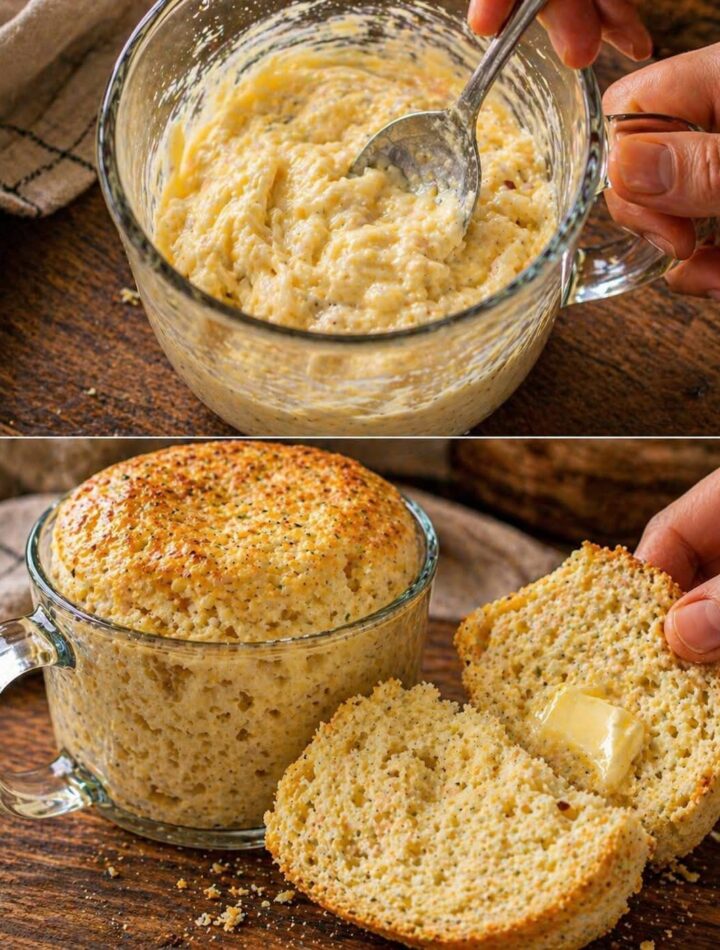
Microwave on high for 90 seconds to 2 minutes until the bread rises and the center is fully set.
6. Cool Slightly
Allow the bread to rest for about 1 minute before removing from the mug.
7. Slice and Serve
Carefully loosen the edges, flip onto a plate, slice, and serve warm.
Delicious Serving Ideas
Enjoy your mug bread with:
- Butter
- Jam
- Cream cheese
- Peanut butter
- Garlic spread
- Honey
Flavor Variations
Healthy Whole Wheat Mug Bread
Replace all-purpose flour with whole wheat flour.
Keto Microwave Bread
Use almond flour instead of regular flour and replace milk with cream.
Garlic Herb Bread
Add garlic powder, oregano, and parsley.
Sweet Breakfast Bread
Mix in honey or sugar for a slightly sweet flavor.
Chocolate Mug Bread
Add cocoa powder and a little sugar for a dessert-style version.
Helpful Tips for Best Results
- Use a wide mug for even cooking.
- Do not overcook or the bread may become dry.
- Let the bread rest briefly after microwaving.
- Use fresh baking powder for better rise.
- Add a little extra milk if the texture feels too thick.
Nutrition Information
- Provides quick carbohydrates for energy
- Contains protein from egg and milk
- Lower in preservatives than packaged bread
- Can be adapted for keto, low-carb, or high-protein diets
- Budget-friendly and portion-controlled
Final Thoughts
This microwave mug bread recipe is one of the fastest and easiest ways to enjoy fresh homemade bread without using an oven. Soft, fluffy, affordable, and highly customizable, it is perfect for breakfast, snacks, light meals, or quick comfort food anytime.
Source: Inspired by traditional quick bread recipes, microwave baking methods, and homemade single-serving bread techniques.